Marine Origami: Exploring Joseph Hwang’s Work
Joseph Hwang’s detailed marine origami designs, often shared as a comprehensive PDF, represent a unique intersection of artistic skill and biological accuracy․
Marine origami is a captivating art form dedicated to recreating the beauty and diversity of ocean life through the ancient technique of paper folding․ It transcends simple recreation, aiming for anatomical accuracy and artistic expression․ Joseph Hwang stands as a pivotal figure, renowned for his incredibly detailed and realistic marine creature origami․
Hwang’s work isn’t merely about folding paper; it’s about understanding the underlying structures of marine animals․ He meticulously studies their forms, translating biological complexity into elegant origami designs․ His influence is significantly amplified by the widespread availability of his work through a detailed PDF document, making his expertise accessible to a global audience of origami enthusiasts․
Joseph Hwang: A Pioneer in Marine Origami
Joseph Hwang is widely recognized as a leading innovator in the field of marine origami, distinguished by his commitment to both artistic beauty and scientific accuracy․ He doesn’t simply replicate shapes; he strives to capture the essence of each creature’s anatomy through intricate folding techniques․ His detailed designs, often shared via a comprehensive PDF, have inspired countless origami artists worldwide․
Hwang’s pioneering approach involves a deep understanding of marine biology, which informs his origami creations․ The accessibility of his PDF resource has democratized this specialized art form, allowing enthusiasts to learn and replicate his complex models, furthering his legacy within the origami community․
The “Marine Origami” PDF & Its Significance
Hwang’s readily available PDF is central to disseminating his marine origami designs, offering detailed diagrams and instructions for recreating his stunning models․
What is the Joseph Hwang Marine Origami PDF?
Joseph Hwang’s “Marine Origami” PDF is a meticulously crafted compilation of origami diagrams focused exclusively on creatures of the sea․ It’s not merely a collection of folding instructions; it’s a detailed guide showcasing Hwang’s innovative techniques for capturing the anatomical nuances and graceful movements of marine life through paper․ The PDF serves as a primary resource for origami enthusiasts seeking to elevate their skills and explore a specialized niche within the art form․
It’s a testament to Hwang’s dedication, providing accessible instructions for both beginners and experienced folders, allowing them to recreate his impressive designs․ The document’s significance lies in its comprehensive nature and the artistic vision it embodies․
Availability and Accessing the PDF
Determining the current availability of Joseph Hwang’s Marine Origami PDF requires diligent searching, as it isn’t consistently hosted on a single, permanent platform․ Historically, it has been shared through various origami communities and personal websites, often requiring membership or direct requests to access․ Online forums dedicated to origami frequently contain threads discussing the PDF and potential download links, though these can become outdated․
It’s crucial to exercise caution when downloading from unfamiliar sources to avoid potential security risks․ Checking reputable origami resource websites is recommended for updated information regarding its accessibility․
Content Overview: Species Covered in the PDF
Joseph Hwang’s Marine Origami PDF is renowned for its diverse collection of meticulously designed aquatic creatures․ The compilation features a wide array of species, ranging from commonly recognized marine life like sharks, rays, and sea turtles, to more delicate and complex organisms such as jellyfish and various fish species․ The PDF doesn’t limit itself to just a few models; it aims for comprehensive coverage․
Each model is accompanied by detailed diagrams, showcasing Hwang’s commitment to clarity and precision, enabling origami enthusiasts of varying skill levels to attempt these creations․
Key Origami Techniques Used by Hwang
Joseph Hwang masterfully employs wet-folding, box-pleating, and reverse folds within his marine origami, achieving remarkably realistic and graceful representations of sea life․
Wet-Folding for Realistic Forms
Joseph Hwang’s exceptional skill with wet-folding is central to the lifelike quality of his marine origami creations․ This technique involves dampening the paper during folding, allowing for softer curves and more sculpted shapes – crucial for replicating the organic forms of jellyfish, sharks, and rays․
Unlike traditional dry-folding, which produces sharp creases, wet-folding enables a more fluid and natural aesthetic․ Hwang’s PDF instructions often detail precise dampening methods, emphasizing the importance of paper type and water control․ The resulting models exhibit a remarkable degree of anatomical accuracy and visual appeal, showcasing the power of this technique in capturing the essence of marine life․
Box-Pleating and its Application to Marine Life
Box-pleating, a foundational origami technique, finds innovative application in Joseph Hwang’s marine origami designs, particularly when representing complex structures․ This method involves creating a grid of alternating folds, forming a series of “boxes” within the paper․ Hwang skillfully utilizes box-pleating to establish the underlying framework for creatures like manta rays and certain shark species․
His PDF guides demonstrate how this technique allows for detailed shaping and layering, essential for achieving realistic textures and forms․ By strategically manipulating the box-pleated structure, Hwang captures the subtle curves and anatomical nuances of marine animals, elevating his origami beyond simple representation․
Reverse Folds and Their Importance
Reverse folds are absolutely crucial in Joseph Hwang’s marine origami, enabling the creation of intricate details and anatomical accuracy․ Unlike simple folds, reverse folds allow the paper to change direction, effectively “turning inside out” to form fins, tails, and other defining features of marine life․
Hwang’s PDF tutorials meticulously illustrate the precise execution of these folds, demonstrating how they contribute to the overall realism of his models․ Mastering reverse folds is key to achieving the graceful curves and dynamic poses characteristic of his origami creations, particularly in species like jellyfish and sea turtles․
Specific Marine Creatures Featured
Joseph Hwang’s influential marine origami PDF showcases a diverse range of species, including jellyfish, sharks, rays, and sea turtles, each meticulously designed․
Origami Jellyfish: Techniques and Variations
Hwang’s jellyfish models, prominently featured within his marine origami PDF, demonstrate a mastery of wet-folding techniques to achieve flowing, translucent forms․ The PDF likely details multiple variations, ranging from simple, beginner-friendly designs to complex, anatomically accurate representations․
These models often utilize reverse folds to create the bell’s delicate curves and tentacles․ Hwang’s approach emphasizes capturing the ethereal quality of jellyfish, employing paper choice and subtle shaping to mimic their gelatinous texture․ The instructions within the PDF probably highlight how to manipulate the paper to create a sense of movement and organic form, essential for realistically portraying these fascinating creatures․
Origami Sharks: Complexity and Design
Joseph Hwang’s shark origami, detailed within his influential marine origami PDF, showcases a significant leap in complexity compared to simpler models․ The PDF likely presents multiple shark species, each demanding advanced techniques like box-pleating and intricate reverse folds to accurately depict their streamlined bodies and powerful fins․
These designs prioritize anatomical correctness, reflecting Hwang’s dedication to blending art and biology․ The PDF probably includes diagrams illustrating how to achieve the characteristic shark shape, emphasizing the importance of precise folding for a realistic appearance․ Expect detailed instructions on creating the caudal fin and pectoral fins, crucial elements of shark design․
Origami Rays: Achieving Graceful Shapes
Joseph Hwang’s origami rays, documented in his celebrated marine origami PDF, are renowned for capturing the elegant, fluid motion of these creatures․ The PDF likely features various ray species, each presenting unique folding challenges to replicate their flattened bodies and expansive pectoral fins․
Hwang’s designs emphasize wet-folding techniques to soften the paper and create gentle curves, essential for portraying the ray’s graceful form․ Expect detailed diagrams within the PDF illustrating how to achieve the characteristic wing-like shape, focusing on precise folds to convey a sense of underwater gliding․
Origami Sea Turtles: Capturing Anatomical Accuracy
Joseph Hwang’s sea turtle origami, detailed within his influential marine origami PDF, showcases his commitment to anatomical precision․ The PDF likely presents multiple turtle species, each demanding specific folding sequences to replicate their distinctive shell structures and flipper shapes․
Hwang’s approach probably utilizes a combination of techniques, including box-pleating to define the shell’s scutes and reverse folds to create the head and limbs․ The PDF diagrams would likely emphasize achieving a realistic carapace curvature and accurately portraying the turtle’s streamlined body, demonstrating a blend of art and biological understanding․
The Artistic and Scientific Aspects
Joseph Hwang’s marine origami PDF beautifully merges artistic expression with detailed biological study, offering a unique way to visualize marine anatomy․
Blending Art and Biology in Origami Design
Joseph Hwang’s approach to marine origami, meticulously documented in his widely circulated PDF, transcends mere paper folding; it’s a profound exploration of form and function․ He doesn’t simply recreate the shape of a marine creature, but strives to embody its anatomical essence within the constraints of the origami medium․
This requires a deep understanding of marine biology – muscle structure, skeletal systems, and how these elements contribute to movement and overall form․ Hwang’s designs aren’t just aesthetically pleasing; they’re informed by scientific accuracy, making his work a compelling example of how art and science can enrich each other․ The PDF serves as a testament to this harmonious blend․
Using Origami to Understand Marine Animal Anatomy
Joseph Hwang’s marine origami, particularly as detailed in his accessible PDF, offers a unique pedagogical tool for understanding complex marine animal anatomy․ The process of folding forces a consideration of how different body parts connect and move, revealing underlying structural relationships․
By translating three-dimensional forms into two-dimensional diagrams and then back again, Hwang’s designs encourage a deeper spatial awareness․ Students and enthusiasts alike can gain insights into the skeletal and muscular systems of creatures like jellyfish or sharks․ The PDF isn’t just instructions; it’s a visual dissection, fostering anatomical comprehension․
The Educational Value of Marine Origami
Joseph Hwang’s marine origami, readily available as a detailed PDF resource, presents significant educational opportunities across disciplines․ Beyond the artistic skill involved, it fosters spatial reasoning, problem-solving, and an appreciation for marine biology․ The PDF serves as an accessible entry point for students of all ages to explore complex anatomical structures․
It encourages hands-on learning, moving beyond textbook diagrams to a tactile understanding of form․ Furthermore, Hwang’s work promotes interdisciplinary connections between art, science, and mathematics, making it a valuable tool in diverse educational settings․
Materials and Tools for Marine Origami
Joseph Hwang’s marine origami, detailed in his PDF, benefits from quality paper – often thin, durable stock – and basic folding tools for precision․
Paper Selection: Types and Weights
Joseph Hwang’s intricate marine origami, as showcased in his influential PDF, demands careful paper selection․ He often favors thinner papers, typically between 60-80gsm, allowing for multiple layers and complex shaping crucial for realistic marine forms․
Japanese washi paper is a popular choice due to its strength and ability to hold creases sharply, even when wet-folded – a technique frequently employed by Hwang․ However, readily available options like printer paper (20lb/75gsm) can also be suitable for beginners․
The paper’s ability to retain moisture without tearing is vital, especially when attempting wet-folding techniques detailed within the PDF․ Experimentation with different weights and textures is encouraged to discover what best suits individual folding styles and the specific model being created․
Essential Origami Tools
While Joseph Hwang’s marine origami, documented in his detailed PDF, can be started with just paper, certain tools significantly enhance the process and final results․ A bone folder is invaluable for creating crisp, precise creases, essential for defining the anatomical details of marine creatures․
Tweezers are helpful for manipulating small folds, particularly in complex models․ A water brush or spray bottle is crucial for wet-folding, allowing the paper to become pliable and hold sculpted shapes․
A cutting mat and craft knife can be useful for minor adjustments or preparing paper․ Ultimately, the PDF emphasizes patience and practice over specialized equipment, but these tools streamline the folding experience․
Difficulty Levels and Progression
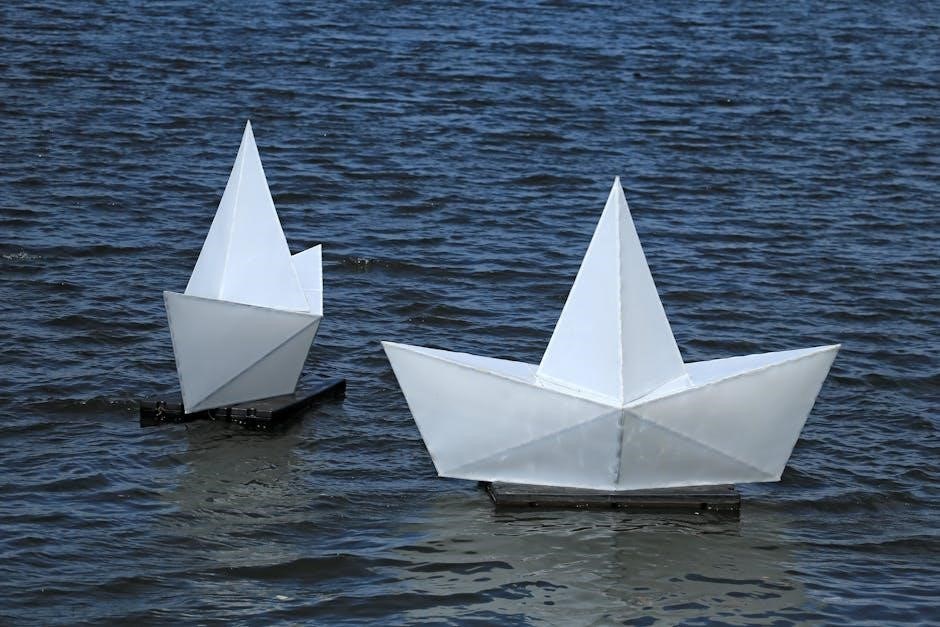
Joseph Hwang’s marine origami PDF offers models ranging from beginner-friendly jellyfish to advanced sharks, allowing folders to progressively build skills and tackle complexity․
Beginner-Friendly Marine Origami Models
Joseph Hwang’s marine origami PDF is an excellent starting point for newcomers, featuring several accessible models perfect for building foundational skills․ Simple jellyfish designs are frequently included, requiring fewer intricate folds and offering immediate visual reward․ These introductory models focus on basic techniques like valley and mountain folds, preparing beginners for more complex creations․
Other easily achievable designs often encompass stylized fish or simple ray forms․ The PDF typically provides clear, step-by-step diagrams, making the folding process less daunting․ Successfully completing these initial models boosts confidence and encourages further exploration within the captivating world of marine origami, paving the way for tackling more challenging subjects․
Intermediate Challenges and Techniques
Moving beyond beginner models within Joseph Hwang’s marine origami PDF introduces techniques like preliminary folds and more complex base constructions․ Intermediate folders will encounter designs demanding precise execution of reverse folds and squash folds, crucial for shaping realistic fins and tails․ The PDF often features slightly more anatomically accurate fish species, requiring careful attention to proportion and detail․
Successfully navigating these challenges necessitates a solid grasp of fundamental origami principles․ Wet-folding, subtly introduced, begins to play a role in achieving smoother curves and a more organic appearance․ These models demand patience and practice, building skills essential for tackling advanced marine origami creations․
Advanced Models: Mastering Complexity
Joseph Hwang’s marine origami PDF culminates in exceptionally complex models, often featuring intricate internal structures and demanding multi-stage folding sequences․ These designs, like highly detailed sharks or cephalopods, require mastery of techniques like box-pleating and advanced reverse folds․ Achieving anatomical accuracy necessitates a deep understanding of marine animal morphology․
Advanced folders will grapple with significant paper management challenges and the need for precise, symmetrical execution․ Wet-folding becomes essential for sculpting realistic textures and forms․ These models represent a true test of origami skill, pushing the boundaries of paper artistry and biological representation․
Resources for Learning Marine Origami
Online tutorials and origami communities offer guidance, while Hwang’s PDF serves as a core resource for studying his innovative marine origami designs․
Online Tutorials and Websites
While a dedicated website solely for Joseph Hwang’s marine origami is currently unavailable, numerous online platforms host tutorials inspired by his work and techniques detailed within his influential PDF․ Websites like YouTube feature creators demonstrating folding sequences for various marine creatures, often referencing Hwang’s designs as foundational examples․
Origami instruction sites frequently showcase models achievable with the knowledge gained from studying his work․ Forums dedicated to origami, such as those found on Reddit or specialized origami communities, provide spaces for enthusiasts to share tips, ask questions, and discuss the intricacies of Hwang’s approach to representing marine life through paper folding․ These resources collectively build upon the core principles outlined in the PDF․
Origami Communities and Forums
Engaging with origami communities is invaluable for those exploring Joseph Hwang’s marine origami, particularly after studying his detailed PDF․ Online forums, like those on Reddit (r/origami) and dedicated origami websites, offer platforms to share creations, seek guidance, and discuss complex folds․
These spaces often feature discussions specifically about Hwang’s techniques, allowing enthusiasts to dissect his designs and troubleshoot challenges encountered while replicating models from the PDF․ Experienced folders readily share tips and variations, fostering a collaborative learning environment․ Participating in these communities enhances understanding and appreciation for the artistry and precision inherent in Hwang’s work․
Books and Publications on Origami
While Joseph Hwang primarily distributes his marine origami designs through a dedicated PDF and online channels, foundational origami literature complements studying his work․ Books covering core techniques – like wet-folding and box-pleating – provide essential background․ Titles by Robert Lang and David Brill offer in-depth explorations of these methods, crucial for tackling Hwang’s complex models․
Publications showcasing diverse origami creations can inspire variations on Hwang’s designs found within the PDF․ Exploring broader origami artistry enhances appreciation for the field and provides a stronger base for independent design exploration․
Bing Search Insights: Related Searches
Bing’s related searches reveal user interest in “origami instructions,” “marine life origami,” and specifically, locating Joseph Hwang’s influential PDF guide․
Bing’s Related Search Suggestions for “Marine Origami”
Bing’s auto-suggest feature, when searching “marine origami,” immediately highlights user intent beyond basic definitions․ Prominent suggestions include queries like “marine origami pdf,” indicating a strong desire for downloadable instructions and patterns․ Further related searches reveal interest in specific creatures – “origami shark,” “origami jellyfish,” and “origami ray” – suggesting users seek models inspired by diverse marine life․
Notably, searches incorporating “Joseph Hwang” appear frequently, demonstrating his recognized authority within the field․ Other suggestions point towards learning resources, such as “origami tutorial” and “easy origami,” catering to varying skill levels․ Bing’s SERPs effectively surface these related searches, offering a surprisingly deep view into user exploration of this niche topic․
Analyzing User Search Intent Regarding Hwang’s Work
User searches specifically referencing “Joseph Hwang” reveal a clear intent to locate his authoritative marine origami designs․ The frequent pairing of his name with “PDF” indicates a desire for comprehensive, downloadable instructions – likely his detailed species guides․ Beyond access, searches suggest users appreciate Hwang’s blend of artistic skill and anatomical accuracy․
The presence of related queries like “origami tutorial” alongside his name implies a need for guidance in replicating his complex models․ This suggests users aren’t simply seeking finished diagrams, but also learning opportunities․ Bing’s data highlights a user base actively seeking to learn from Hwang’s expertise․
Bing’s AI-Powered Search Results for Origami
Bing’s AI capabilities dynamically surface relevant content when searching for “marine origami” and “Joseph Hwang PDF․” It moves beyond simple keyword matching, understanding the user’s intent to find instructional materials․ The AI prioritizes results offering downloadable guides and tutorials, recognizing the practical application sought by searchers․
Furthermore, Bing’s AI generates related search suggestions – like specific marine creature origami – demonstrating an understanding of the topic’s nuances․ This proactive assistance enhances the user experience, guiding them towards more refined searches and relevant resources within the origami community․
Troubleshooting Common Origami Challenges
Hwang’s complex marine origami, often accessed via PDF, can present difficulties; precise folds and paper quality are crucial for successful model creation․
Dealing with Paper Creases and Tears
Joseph Hwang’s intricate marine origami designs, frequently distributed as a detailed PDF, demand precise folding, making paper integrity paramount․ Unexpected creases can disrupt the form, especially in complex models like sharks or rays․ Gentle re-creasing, using a bone folder, can sometimes mitigate minor imperfections․
However, significant tears require careful consideration․ For small tears, archival-quality tape, applied sparingly to the back of the paper, can provide support․ Larger tears may necessitate starting anew, as they can severely compromise the structural integrity and aesthetic appeal of the finished model․ Choosing appropriate paper weight, as detailed in resources accompanying the PDF, helps prevent tearing․
Achieving Symmetrical Folds
Joseph Hwang’s marine origami, often accessed through his detailed PDF guides, relies heavily on precise symmetry for realistic representation of marine life․ Asymmetry detracts from the anatomical accuracy he strives for․ Careful alignment during each fold is crucial; using a ruler or straight edge can assist in maintaining straight lines․
Regularly checking alignment against the diagram within the PDF is essential․ If discrepancies arise, gently unfold and re-crease․ Practice with simpler models first builds the muscle memory needed for complex designs․ Consistent pressure and deliberate movements contribute to symmetrical results, enhancing the final form․
Understanding Origami Diagrams
Joseph Hwang’s marine origami PDF utilizes standard origami notation, but familiarity is key to successfully recreating his intricate designs․ Diagrams depict fold lines – solid for mountain folds, dashed for valley folds․ Arrows indicate the direction of the fold, and symbols represent more complex maneuvers․
Carefully studying each step before execution prevents errors․ The PDF often includes zoomed-in views of critical folds․ Recognizing common symbols, like squash folds or petal folds, streamlines the process․ Patience and a methodical approach are vital for deciphering and implementing the instructions accurately․
The Future of Marine Origami
Hwang’s influence inspires continued innovation, potentially merging origami with 3D printing to create complex, life-sized marine sculptures based on his PDF designs․
Innovations and Emerging Trends
The future of marine origami, heavily influenced by Joseph Hwang’s meticulous work documented in his widely circulated PDF, points towards exciting advancements․ We’re seeing a growing trend of artists utilizing digital tools to design increasingly complex models before folding, streamlining the process and enhancing accuracy․
Furthermore, the integration of computational origami—algorithms that assist in designing foldable structures—promises to unlock entirely new possibilities for representing marine life․ Expect to see more experimentation with unconventional materials beyond traditional paper, exploring textures and translucency to better mimic aquatic creatures․ The accessibility of Hwang’s PDF continues to fuel this creative surge, inspiring a new generation of origami artists․
The Potential for 3D Origami Marine Life
Building upon the foundation laid by Joseph Hwang’s detailed marine origami designs – readily available in his influential PDF – the field is poised for a leap into three-dimensional representation․ While traditional origami is largely two-dimensional, modular origami techniques allow for the construction of complex, free-standing sculptures․
Imagine intricate coral reefs or life-sized whale models assembled from hundreds of individual origami units, inspired by the anatomical precision within Hwang’s work․ This expansion opens doors for interactive exhibits and educational displays, bringing the wonders of the ocean to life in a tangible, artistic form․ The PDF serves as a crucial resource for aspiring 3D origami artists․
Joseph Hwang’s Continued Influence
Joseph Hwang’s impact on the world of origami, particularly marine origami, remains substantial, largely due to the accessibility of his work through the widely circulated PDF․ This document isn’t merely a collection of diagrams; it’s a masterclass in blending artistic vision with scientific understanding of marine anatomy․
His techniques continue to inspire both seasoned origami artists and newcomers, fostering a growing community dedicated to recreating and expanding upon his designs․ The PDF acts as a foundational text, ensuring his legacy endures and fuels further innovation within the field, driving the evolution of origami as an art form․
Leave a Reply
You must be logged in to post a comment.