Dominguez-Escalante Journal PDF: A Comprehensive Overview (Updated 03/08/2026)
Accessing the Dominguez-Escalante Journal PDF is readily available through the University of Utah Press eBook Collection and the Museum of New Mexico’s Angelico Chavez History Library.
Researchers can explore digitized versions, translations by Fray Angelico Chavez, and editorial contributions from Ted J. Warner, enhancing understanding of this pivotal expedition.
Historical Context of the Expedition
The 1776 Dominguez-Escalante expedition unfolded within a complex geopolitical landscape, driven by Spain’s anxieties regarding Russian expansion along the Pacific coast and persistent threats from British influence in the region. Spain sought to solidify its control over the northern frontier of New Spain, encompassing present-day southwestern United States, and to establish a viable land route connecting Santa Fe, New Mexico, with the California missions.
This period witnessed increasing interest in exploring and mapping the vast, largely unknown territories beyond the established Spanish settlements. The expedition, led by Fray Francisco Atanasio Dominguez and Fray Silvestre Vélez de Escalante, was officially sanctioned to assess the feasibility of such a route, evaluate potential resources, and extend Spanish influence among indigenous populations. The journal itself, meticulously documenting their journey, provides invaluable insight into the prevailing Spanish colonial mindset and the challenges of traversing the rugged terrain of the American West during the late 18th century.
The Primary Goal: Spanish Expansion and Route Finding
The overarching objective of the 1776 Dominguez-Escalante expedition was twofold: to expand Spanish dominion northward and, crucially, to discover a practical overland route from Santa Fe, New Mexico, to Monterey, California. Existing sea routes were lengthy and vulnerable, prompting the search for a more direct land connection to bolster communication and supply lines between the distant Spanish missions.
Beyond logistical considerations, the expedition aimed to assert Spanish sovereignty over territories claimed but not fully controlled, and to assess the potential for establishing new settlements and converting indigenous populations to Christianity. The detailed observations recorded in the Dominguez-Escalante Journal PDF reveal a systematic effort to map the landscape, document resources, and gauge the receptiveness of Native American tribes. Success in finding a viable route would have significantly strengthened Spain’s position in the face of growing external pressures.
Fray Francisco Atanasio Dominguez
Fray Francisco Atanasio Dominguez, a pivotal figure in the 1776 expedition, served as its principal leader and chronicler. His meticulous record-keeping, preserved in the Dominguez-Escalante Journal PDF, provides invaluable insights into the journey’s challenges, discoveries, and interactions with indigenous communities. As a Franciscan missionary, Dominguez possessed a deep commitment to expanding the Catholic faith and establishing a Spanish presence in unexplored territories.
His role extended beyond spiritual guidance; Dominguez was responsible for overseeing the expedition’s logistical arrangements and maintaining discipline among the travelers. The journal’s detailed descriptions of the landscape, flora, fauna, and native cultures reflect Dominguez’s keen observational skills and scholarly inclinations. Translated by Fray Angelico Chavez and edited by Ted J. Warner, the Dominguez-Escalante Journal PDF stands as a testament to his dedication and enduring legacy.
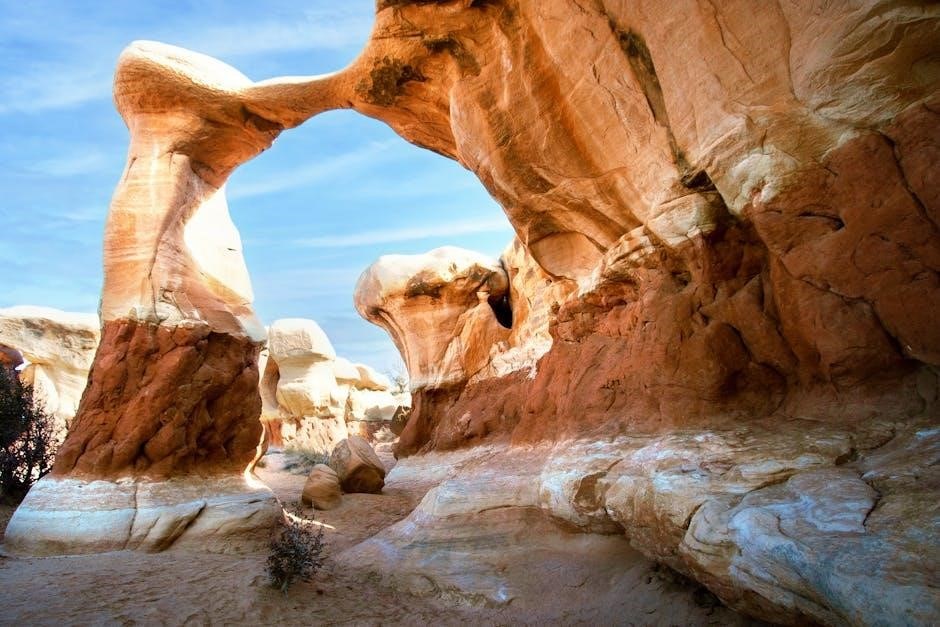
Fray Silvestre Vélez de Escalante
Fray Silvestre Vélez de Escalante, alongside Fray Francisco Atanasio Dominguez, co-led the ambitious 1776 expedition documented in the Dominguez-Escalante Journal PDF. Escalante’s contributions were crucial to the success of the journey, offering both spiritual support and practical assistance to the expedition members. Like Dominguez, he was a Franciscan missionary driven by a desire to spread Christianity and extend Spanish influence northward.
The Dominguez-Escalante Journal PDF reveals Escalante’s resilience and adaptability in the face of harsh conditions and unfamiliar terrain. His observations, interwoven with Dominguez’s, provide a comprehensive account of the expedition’s encounters with various Native American tribes. Through Chavez’s translation and Warner’s editing, Escalante’s voice resonates within the journal, offering a unique perspective on the challenges and triumphs of exploring the American West.
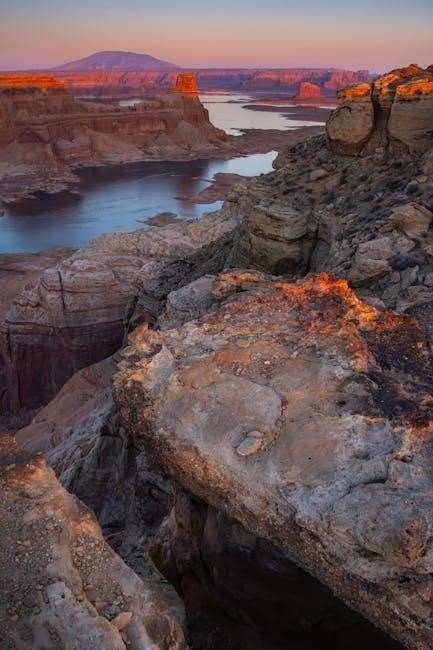
The 1776 Expedition Route
The 1776 Expedition Route, detailed within the Dominguez-Escalante Journal PDF, spanned Colorado, Utah, Arizona, and New Mexico, seeking a path to California.

Starting Point: Santa Fe, New Mexico
The Dominguez-Escalante expedition commenced its ambitious journey from Santa Fe, New Mexico, in 1776, a pivotal detail meticulously documented within the Dominguez-Escalante Journal PDF. This starting point was strategically chosen as a well-established Spanish colonial hub, providing necessary supplies and manpower for the arduous trek westward.
The journal entries, accessible through resources like the University of Utah Press eBook Collection, reveal the initial preparations and the fervent hopes accompanying the departure. Santa Fe served not merely as a logistical base, but also as a symbol of Spanish authority and expansionist ambitions in the region.
The Dominguez-Escalante Journal PDF illustrates the expedition’s intent to chart a viable route from Santa Fe to Monterey, California, a challenging undertaking given the largely unexplored and often hostile terrain. The detailed accounts within the journal highlight the significance of Santa Fe as the launching pad for this historic exploration, shaping the future cartography of the American West.
Journey Through Colorado
The Dominguez-Escalante Journal PDF vividly details the expedition’s challenging passage through the territory that is now Colorado in 1776. The journal entries, available via resources like EBSCOhost, reveal the difficulties encountered navigating the rugged landscapes and interacting with indigenous populations.
The explorers faced harsh weather conditions and unfamiliar terrain, meticulously recording their observations within the journal. These accounts, preserved in the Dominguez-Escalante Journal PDF, offer invaluable insights into the region’s geography and the lives of its inhabitants during that era.
The expedition’s route through Colorado, as mapped and described in the journal, contributed significantly to Spain’s growing knowledge of the West. Researchers utilizing the digitized journal can trace their path and understand the challenges faced, furthering our understanding of this pivotal exploration documented within the Dominguez-Escalante Journal PDF.
Exploration of Utah Valley
The Dominguez-Escalante Journal PDF provides a detailed account of the expedition’s arrival and exploration of Utah Valley in 1776. Addison Blair’s analysis, accessible through Intermountain Histories, complements the primary source material found within the journal itself.
The journal entries, now readily available in PDF format, document the explorers’ encounters with the local Native American tribes and their observations of the valley’s resources and potential for settlement. These firsthand accounts, preserved in the Dominguez-Escalante Journal PDF, are crucial for understanding the region’s history.
The expedition’s detailed descriptions of Utah Valley, as recorded in the Dominguez-Escalante Journal PDF, significantly contributed to Spanish cartographic knowledge of the area. Researchers can utilize the journal to trace their route and analyze their assessments of the land’s suitability for colonization.
Arizona and New Mexico Territories Visited
The Dominguez-Escalante Journal PDF meticulously chronicles the expedition’s passage through both Arizona and New Mexico territories in 1776. The journal details their initial departure from Santa Fe, New Mexico, and their subsequent explorations southward, providing invaluable insights into the landscape and indigenous populations encountered.
Researchers utilizing the Dominguez-Escalante Journal PDF can trace the expedition’s route through challenging terrains, noting their observations on water sources, vegetation, and potential obstacles to establishing a viable route to California. The journal’s descriptions offer a unique perspective on the region before significant American settlement.
The digitized Dominguez-Escalante Journal PDF allows for detailed study of the expedition’s interactions with various Native American groups within these territories, shedding light on the cultural exchanges and tensions of the time. It’s a primary source for understanding Spanish colonial ambitions in the Southwest.
The Dominguez-Escalante Journal: Content and Significance
The Dominguez-Escalante Journal PDF contains a detailed chronicle of the 1776 expedition, including observations on geography, native populations, and the search for a new route.
Original Manuscript and Translations
The Dominguez-Escalante Journal PDF represents a crucial historical document, originating as a handwritten manuscript detailing the 1776 expedition. Access to the original is limited, making digitized versions and translations invaluable for researchers. Fray Angelico Chavez’s translation stands as a cornerstone, providing an accessible English rendering of the original Spanish text.
This translation, widely available through resources like the University of Utah Press eBook Collection, has significantly broadened the journal’s reach. However, it’s important to note that translations inherently involve interpretation. Ted J. Warner’s editorial contributions further refine understanding, offering critical context and clarifying ambiguities within Chavez’s translation.
Researchers often consult both the translated text and scholarly analyses to gain a comprehensive grasp of the expedition’s events and the perspectives of Dominguez and Escalante. The availability of the Dominguez-Escalante Journal PDF facilitates this comparative study, preserving and disseminating this vital piece of Western history.
Fray Angelico Chavez’s Translation
Fray Angelico Chavez’s translation of the Dominguez-Escalante Journal PDF remains a landmark achievement in Southwestern historical scholarship. A Franciscan friar himself, Chavez possessed a unique understanding of the original text’s religious and cultural context, lending nuance to his English rendering. His work, published in 1995 by the University of Utah Press, made the journal accessible to a wider audience beyond those fluent in 18th-century Spanish.
Chavez’s translation isn’t merely a linguistic conversion; it’s an interpretation shaped by his own historical insights. While highly regarded, scholars acknowledge that all translations involve subjective choices. Therefore, it’s often recommended to consult alongside Ted J. Warner’s editorial contributions, which provide critical analysis and clarification of certain passages.
The enduring value of Chavez’s translation lies in its readability and its ability to convey the spirit of the original journal, offering a compelling narrative of the 1776 expedition. Accessing the Dominguez-Escalante Journal PDF through resources like EBSCOhost allows for easy study of this pivotal work.
Ted J. Warner’s Editorial Contributions
Ted J. Warner’s editorial work significantly enhances the understanding of the Dominguez-Escalante Journal PDF. Serving as editor for the 1995 University of Utah Press edition, Warner didn’t simply present Chavez’s translation; he provided crucial contextualization and critical analysis. His contributions address ambiguities within the original text, offering interpretations of challenging passages and clarifying geographical references.
Warner’s expertise lies in meticulously examining the journal’s historical and cartographic details. He identifies potential inaccuracies and offers alternative readings, prompting readers to engage critically with the narrative. His notes and annotations, integral to the Dominguez-Escalante Journal PDF, illuminate the expedition’s complexities and the challenges faced by the Spanish friars.
Researchers benefit greatly from Warner’s insights, which complement Chavez’s translation. Studying both works together provides a more comprehensive and nuanced understanding of the 1776 expedition and its lasting impact on the American West. Accessing the PDF allows for seamless comparison of both perspectives.
Cartographic Contributions & Mapping the West
The Dominguez-Escalante Journal PDF reveals invaluable cartographic contributions stemming from the 1776 expedition. Prior to Dominguez and Escalante, Spain’s knowledge of the West was limited. The expedition aimed to expand this understanding, meticulously documenting geographical features and potential routes.
The journal itself, when accessed through the PDF, contains descriptions that, when combined with contemporary and later maps, significantly shaped the mapping of the Rocky Mountains, the Great Basin, and the Colorado Plateau. Rare archival maps, often found alongside the journal in digital collections, demonstrate Spain’s evolving understanding.
The expedition’s observations continued to influence cartography well into the American settlement period. The Dominguez-Escalante Journal PDF allows researchers to trace this evolution, comparing the friars’ initial assessments with subsequent mapmaking endeavors. This detailed record provides a unique perspective on the history of Western exploration and mapping.
Accessing the Dominguez-Escalante Journal PDF
Digitized versions of the Dominguez-Escalante Journal PDF are available via the University of Utah Press, Museum of New Mexico, and Intermountain Histories online resources.
University of Utah Press eBook Collection
The University of Utah Press provides convenient access to the Dominguez-Escalante Journal PDF through its eBook Collection, accessible via platforms like EBSCOhost. This digital resource offers a comprehensive version of “The Dominguez-Escalante Journal: Their Expedition Through Colorado, Utah, Arizona, and New Mexico in 1776.”
Researchers and enthusiasts can readily explore the detailed chronicle of the 1776 expedition, benefiting from a searchable and easily navigable format. The eBook facilitates in-depth study of Fray Francisco Atanasio Dominguez and Fray Silvestre Vélez de Escalante’s journey, their observations, and the historical context of Spanish expansion in the American West.
Access requires appropriate institutional subscriptions or individual purchase. The digital format ensures preservation and wider dissemination of this crucial primary source, allowing for detailed analysis of the expedition’s impact on mapping and understanding the region. It’s a valuable tool for scholars and anyone interested in the history of the American Southwest.
Museum of New Mexico ‒ Angelico Chavez History Library
The Museum of New Mexico’s Angelico Chavez History Library holds a significant collection related to the Dominguez-Escalante Journal PDF and the expedition itself. This archive includes eighty-eight blank pages originating from the original 1776 journal, offering a tangible connection to the historical record.
Researchers can access these materials for research purposes, with duplication permitted under the condition of full copyright compliance. The library’s holdings, cataloged as nmsm1ac391-p.sgml (converted from EAD 1.0 to 2002), provide unique insights into the journal’s physical form and its preservation over centuries.
Located in Santa Fe, New Mexico (P.O. Box 2087, 87504-2087), the library serves as a crucial repository for understanding Spanish colonial history in the region. Public access is available, and the collection continues to support scholarly investigation into the Dominguez-Escalante expedition and its lasting legacy.
Intermountain Histories Online Resource
Intermountain Histories provides valuable access to materials concerning the Dominguez-Escalante Journal PDF and the 1776 expedition. Specifically, the platform hosts Addison Blair’s analysis, “The Dominguez-Escalante Expedition Reaches Utah Valley,” offering a focused examination of the expedition’s impact on this crucial geographical area;
This online resource, accessible at https://www.intermountainhistories.org/items/show/35 (accessed February 3, 2026), allows researchers to delve into the expedition’s arrival and initial observations of Utah Valley. Blair’s work contextualizes the journey within the broader narrative of Spanish exploration and colonization.
The platform’s digital format facilitates convenient research, enabling users to explore primary and secondary sources related to the Dominguez-Escalante expedition. It serves as a key component in understanding the expedition’s significance and its contribution to the historical record of the American West.
Copyright and Research Usage
Regarding the Dominguez-Escalante Journal PDF and associated materials, the Museum of New Mexico’s Angelico Chavez History Library outlines specific usage guidelines. Duplication is permitted solely for research purposes, emphasizing responsible academic engagement with this historical document.
However, users are explicitly held accountable for ensuring full compliance with all applicable copyright regulations. This includes proper attribution and adherence to any restrictions imposed by the copyright holder. The library’s contact information – P.O. Box 2087, Santa Fe, New Mexico 87504-2087, U.S.A. – is provided for inquiries.
The library’s digital record, updated June 28, 2004, indicates the conversion of materials from EAD 1.0 to 2002 using v1to02.xsl. Researchers must acknowledge these details when citing the digitized resources, ensuring transparency and academic integrity in their work.
Key Artifacts and Supporting Materials
Rare archival maps, landscape photographs, and even eighty-eight blank pages from the original 1776 journal offer invaluable context for researchers studying the expedition.
Rare Archival Maps
A specially assembled collection of rare archival maps provides a fascinating glimpse into Spain’s evolving understanding of the American West prior to and following the Dominguez-Escalante expedition. These maps visually demonstrate the geographical knowledge – and often, the significant gaps in that knowledge – that shaped Spanish colonial ambitions.
Before 1776, existing maps were often incomplete or based on conjecture. The Dominguez-Escalante expedition’s detailed observations and documentation significantly contributed to filling these voids, refining existing cartography, and creating more accurate representations of the region’s terrain, rivers, and potential settlements.
These cartographic contributions continued to influence mapmaking well into the American settlement period, shaping perceptions and guiding exploration for decades after the initial journey. Studying these maps alongside the journal itself allows researchers to trace the progression of geographical understanding and appreciate the expedition’s lasting impact on the mapping of the West.
Landscape Photographs Related to the Journey
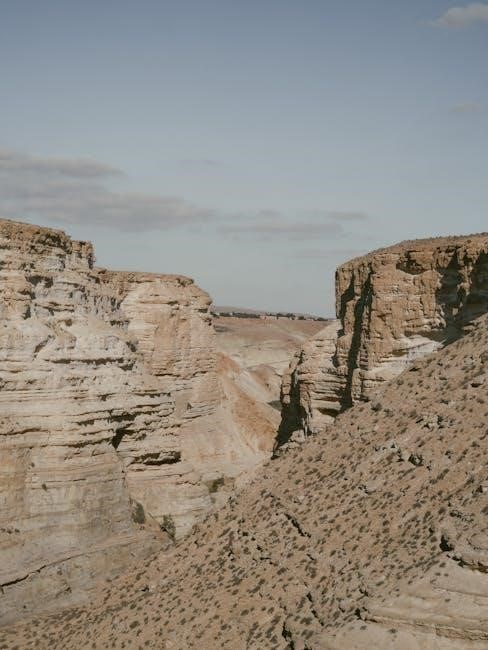
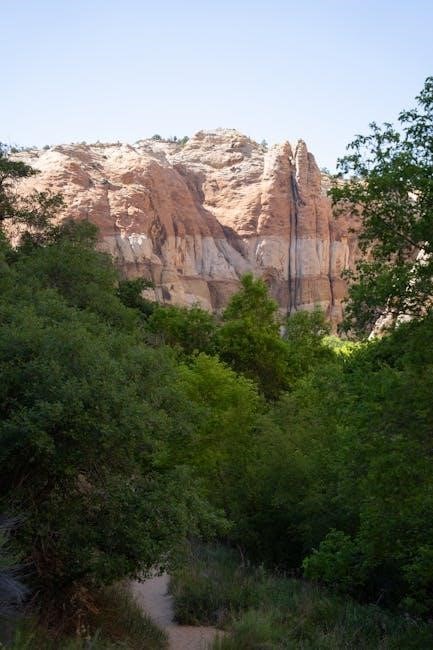
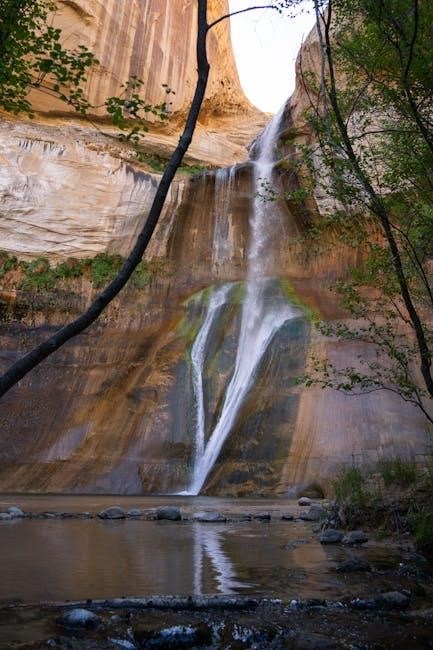
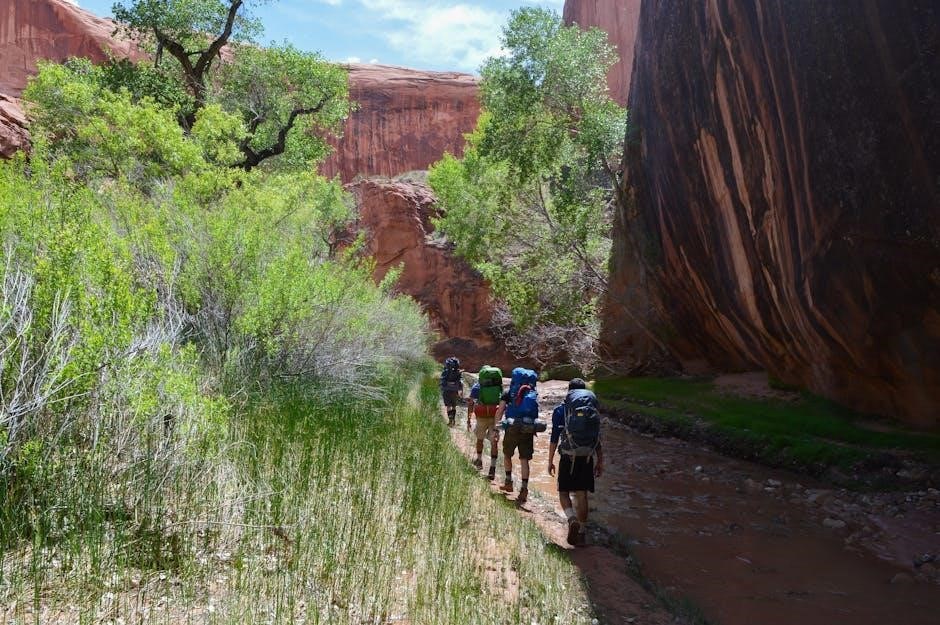
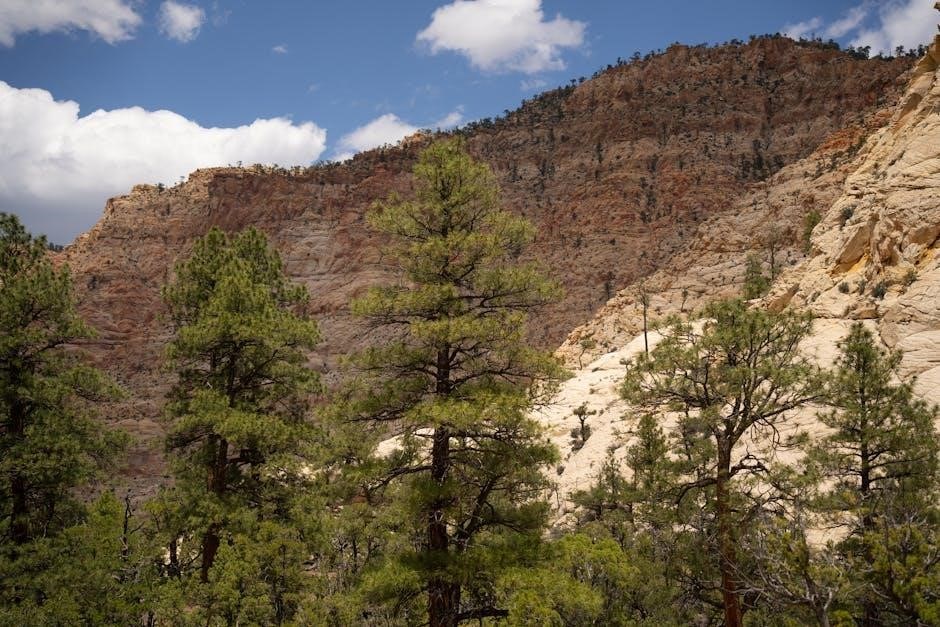
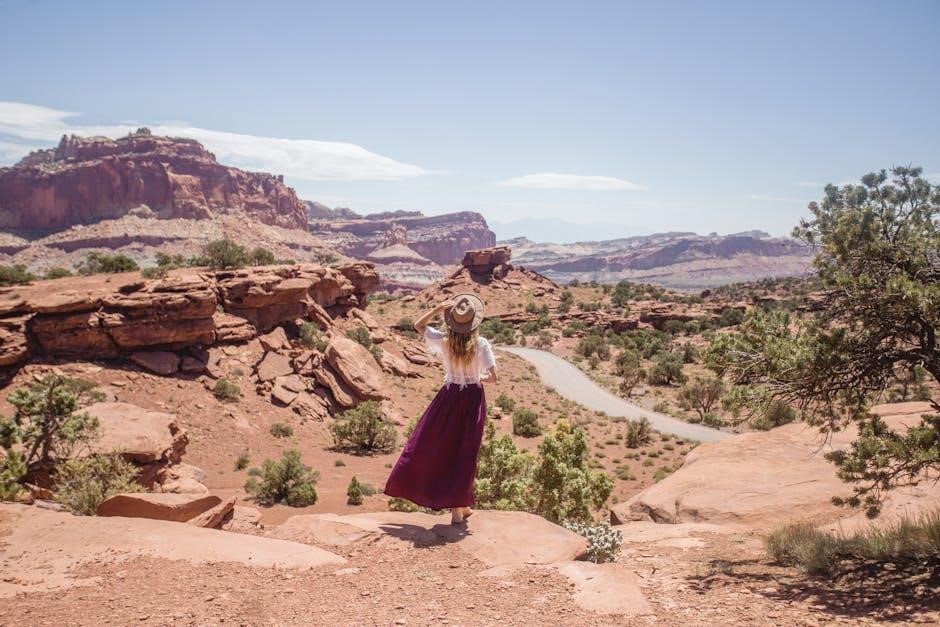
Stunning landscape photographs offer a powerful visual complement to the written accounts within the Dominguez-Escalante Journal, allowing modern viewers to connect with the expedition’s physical environment. These images depict the diverse terrains encountered by Dominguez and Escalante – from the rugged Rocky Mountains to the arid Colorado Plateau and the valleys of present-day Utah and Arizona.
By retracing the expedition’s route through contemporary photography, visitors and researchers can gain a deeper appreciation for the challenges and wonders faced by the explorers; The photographs highlight the enduring beauty of the landscapes, showcasing how much has changed – and how much has remained remarkably consistent – over the centuries.
These visual aids invite a more immersive experience, enabling a richer understanding of the journal’s descriptions and fostering a stronger connection to the historical context of the 1776 expedition.
Blank Pages from the Original Journal
A unique aspect of accessing the Dominguez-Escalante Journal PDF involves the inclusion of eighty-eight blank pages originating from the original 1776 manuscript. These pages, while seemingly empty, represent a tangible connection to the historical artifact and the expedition itself. Their presence offers researchers a glimpse into the physical structure of the journal as it was originally compiled by Dominguez and Escalante.
The Museum of New Mexico’s Angelico Chavez History Library holds this collection, permitting duplication for research purposes, with the user bearing responsibility for all copyright compliance. These blank sheets serve as a reminder of the limitations and uncertainties inherent in historical documentation.
Studying these pages provides valuable insight into the journal’s creation and preservation, enriching the overall understanding of this significant historical record.
Impact and Legacy of the Expedition
The Dominguez-Escalante expedition profoundly shaped maps of the American West, influencing Spanish colonial history and inspiring detailed analyses like Addison Blair’s Utah Valley study.
Shaping Maps of the American West
The Dominguez and Escalante expedition’s cartographic contributions were instrumental in refining Spain’s understanding of the western territories. Before their journey in 1776, Spanish knowledge of regions like Colorado, Utah, Arizona, and New Mexico was limited and often based on conjecture.
The detailed observations recorded in the Dominguez-Escalante Journal PDF, and subsequent mapping efforts, significantly expanded this knowledge base. Rare archival maps, assembled alongside accounts from the journal, demonstrate Spain’s evolving grasp of the West.
This expedition didn’t just document existing geographical features; it actively shaped how the region was perceived and represented. Their work continued to influence mapmaking well into the American settlement period, providing a foundational layer for future exploration and development. Accessing the journal through resources like the University of Utah Press eBook Collection allows modern researchers to trace this cartographic legacy.
Influence on Spanish Colonial History
The 1776 expedition led by Dominguez and Escalante profoundly impacted Spanish colonial history, extending beyond mere geographical discovery. Their primary goal – to inventory new lands for the Spanish crown and establish a route to Monterey – reflected Spain’s ambitions in the face of increasing European competition.
The Dominguez-Escalante Journal PDF provides invaluable insight into the motivations, challenges, and outcomes of this colonial endeavor. Translated by Fray Angelico Chavez and edited by Ted J. Warner, the chronicle details the complexities of interacting with Indigenous populations and assessing the potential for Spanish expansion.
The expedition’s findings influenced subsequent Spanish policies and strategies in the region, shaping the trajectory of colonial development. Studying the journal through resources like Intermountain Histories offers a nuanced understanding of this pivotal moment in the history of the American West and Spanish colonial ambitions.
Dominguez-Escalante Expedition Reaches Utah Valley ⏤ Addison Blair’s Analysis
Addison Blair’s analysis, accessible through Intermountain Histories, provides a focused examination of the Dominguez-Escalante expedition’s arrival in Utah Valley. Blair’s work, built upon the Dominguez-Escalante Journal PDF, meticulously details the expedition’s interactions with the local Ute people and their observations of the valley’s resources.
The analysis highlights the expedition’s limited success in establishing a viable route to California, while emphasizing the significance of their detailed journal entries as a primary source for understanding the region’s pre-settlement conditions. Blair’s interpretation, informed by the journal’s translated text (Fray Angelico Chavez’s translation being key), offers valuable context.
Furthermore, Blair’s study underscores the importance of the journal as a historical document, revealing Spanish perceptions of the landscape and its inhabitants, contributing to a richer understanding of colonial exploration in the American West.
The History of Spanish Fork ‒ Elisha Warner’s Perspective
Elisha Warner’s “The History of Spanish Fork,” published in 1930, draws heavily upon the insights contained within the Dominguez-Escalante Journal PDF to reconstruct the early Spanish presence in the area. Warner utilizes the journal’s detailed descriptions of the landscape, native populations, and the expedition’s challenges to paint a vivid picture of the region’s initial exploration.
His work demonstrates how the journal serves as a foundational document for understanding the origins of Spanish Fork, Utah, and the broader Spanish colonial influence in the territory. Warner’s analysis, informed by the translated accounts of Dominguez and Escalante, highlights the expedition’s impact on local indigenous communities.
Warner’s historical account emphasizes the journal’s value in tracing the evolution of Spanish Fork from a remote exploration point to a settled community, solidifying its place in the narrative of the American West.
Leave a Reply
You must be logged in to post a comment.